

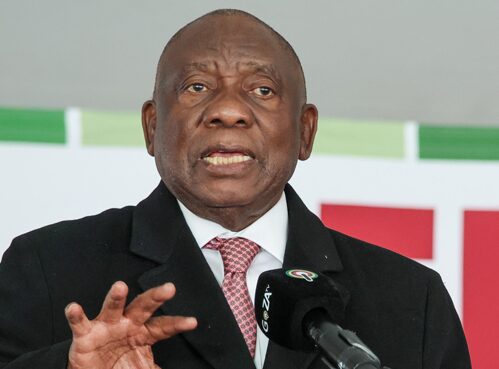

South Africa’s improving public finances must translate into better public services, more job opportunities and meaningful relief for households still struggling with the cost of living, President Cyril Ramaphosa says.
In his weekly newsletter on Monday, 26 October, Ramaphosa said the country had made progress in stabilising government debt and strengthening its financial position. However, he stressed that these improvements must be felt in the everyday lives of South Africans.
For households dealing with rising expenses, unemployment and unreliable public services, a stronger national budget matters most when it leads to practical changes, such as better-maintained roads, well-equipped clinics, improved schools and more opportunities to earn an income.
The President’s remarks follow Finance Minister Enoch Godongwana’s presentation of the Medium-Term Budget Policy Statement (MTBPS) in Parliament last week. The statement outlined progress in managing public finances and set out the government’s priorities for the coming years.
One of the key developments is that South Africa’s public debt has stabilised and is beginning to decline, according to Ramaphosa. The country has also maintained a primary budget surplus since 2023. This means government revenue has exceeded non-interest spending, before accounting for the cost of servicing existing debt.
Why does this matter to ordinary South Africans? When government borrows more, a growing share of public money can go towards paying interest instead of funding services and infrastructure. Managing debt more effectively can help free up resources for development, reduce borrowing costs and strengthen confidence in the economy.
Ramaphosa said the government was working to ensure that improved public finances support economic growth while addressing poverty and unemployment. He also acknowledged that many households remain under pressure from the high cost of living, pointing to the temporary fuel levy reductions announced by the Finance Minister as one measure intended to provide relief.
Government Identifies Billions in Savings
The government is also looking at how public money is spent, rather than focusing only on how much revenue it collects.
According to Ramaphosa, more than R11 billion in savings has been identified over the medium term through the rationalisation of lower-priority programmes. The intention is to reduce waste and improve efficiency while protecting spending that supports vulnerable households and essential services.
Social spending remains a major part of the national budget. The social wage, which includes areas such as healthcare, education, social development and basic services, accounts for around 60% of government spending excluding interest payments, according to the President.
This funding supports free basic services for more than 11 million households, school meals and social grants for more than 18 million beneficiaries.
For many families, these programmes help cover essential needs when household income is limited. Ensuring that public funds reach the people and communities they are intended to support is therefore an important part of improving living conditions across South Africa.
The government is also reviewing infrastructure grants to understand why some provinces and municipalities underspend their allocations, delay projects or complete work that does not meet the required standards.
The aim is to improve how infrastructure budgets are used so that allocated funding results in functioning roads, water systems and other services that communities rely on.
Infrastructure Investment and Jobs Remain Priorities
Ramaphosa said a stronger fiscal position could create more room for infrastructure investment, which plays an important role in economic growth and job creation.
Investment in public infrastructure can support employment during construction and create longer-term opportunities by improving transport, water, electricity and other essential networks. Better infrastructure can also help businesses operate more efficiently and encourage further private-sector investment.
The President also highlighted the government’s plans to strengthen support for survivors of gender-based violence. Additional funding includes resources to employ more than 3,500 social workers and strengthen forensic and investigative services.
South Africa has recorded other signs of economic recovery, including the end of load shedding, improved revenue collection and removal from the Financial Action Task Force grey list. Ramaphosa also pointed to the country’s first sovereign credit rating upgrade in more than 16 years.
The South African Revenue Service collected a record R2.01 trillion in net revenue during the 2025/26 financial year, according to the President. Stronger revenue collection can give government more resources to fund public services and development programmes, although the impact depends on how that money is allocated and spent.
The Real Test is What Changes for South Africans
Despite the progress, Ramaphosa acknowledged that the benefits of economic recovery have not reached everyone. Unemployment remains high, many families continue to struggle financially, and communities still face poor service delivery.
For ordinary South Africans, the improvement in government finances will ultimately matter if it leads to more reliable public services, better infrastructure, stronger social support and greater access to employment opportunities.
A healthier national budget is an important step, but it does not automatically mean that households will have more money available at the end of the month or that municipal services will improve overnight.
The next challenge is turning financial stability into visible results. This will require responsible spending, effective project management and accountability across national, provincial and local government.
As South Africa continues working towards economic recovery, the focus will remain on whether better-managed public finances can help build a more inclusive economy and improve the quality of life for people across the country.

