


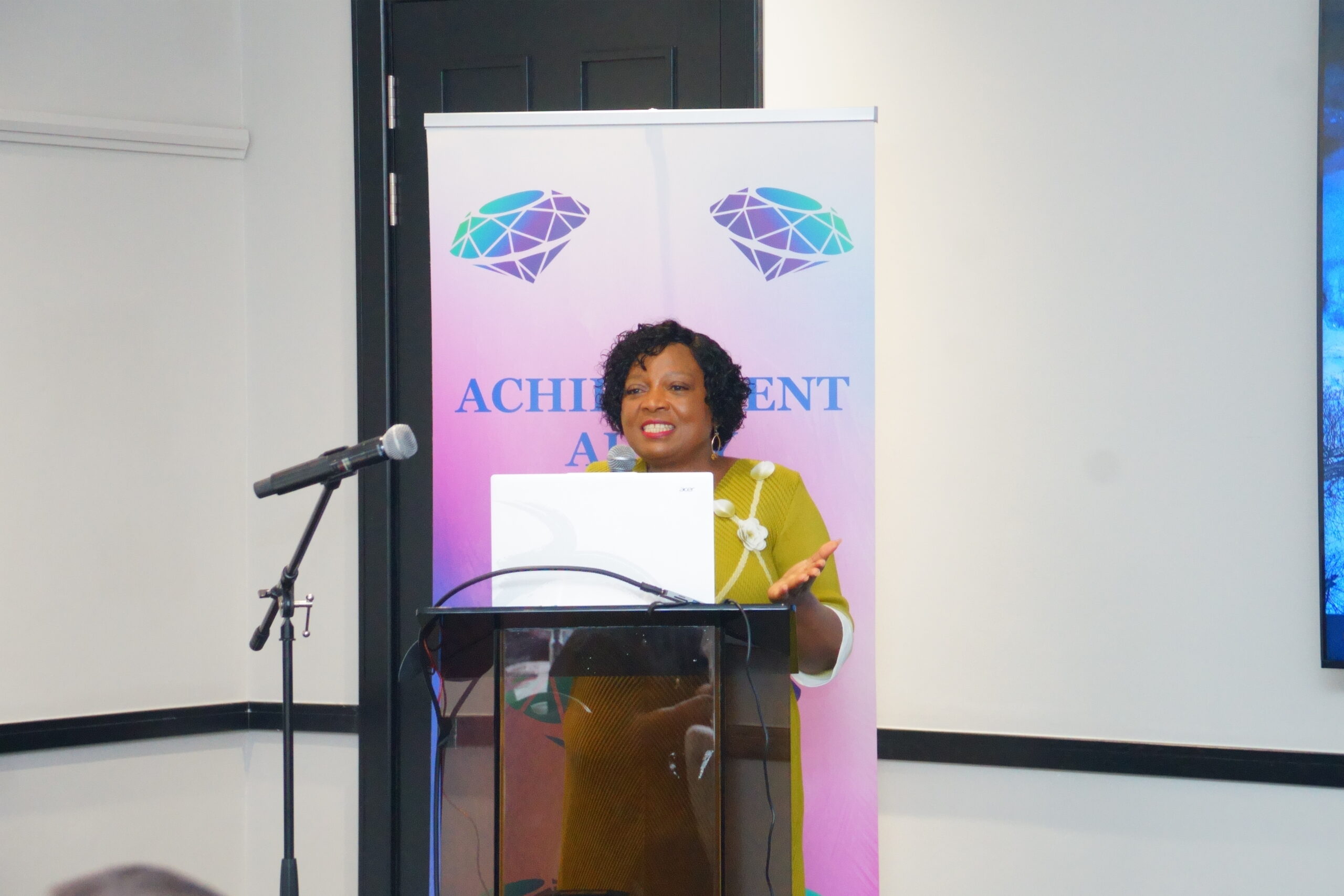

Women entrepreneurs, business leaders and professionals gathered at the NH Hotel Sandton on 28 August for the Women’s Business Summit, hosted by Achievement Alley Group, where the focus was on how women can build businesses that survive, grow and create opportunities in South Africa.
The Women’s Business Summit brought together women from different areas of business under the theme, “Empowering Women. Building Businesses. Creating Opportunities. Connect, Collaborate & Grow.”
Across the programme, speakers explored the realities of starting and running a business, from the legal and financial foundations needed to survive, to technology, leadership, visibility, mental health and the importance of building strong networks.

The event was not simply about celebrating women in business. Much of the discussion centred on the practical challenges that continue to make entrepreneurship difficult, particularly for small businesses.
Deputy Minister of Small Business Development Jane Sithole used her address to challenge both government and business leaders to look at what happens after policies are announced and programmes are launched.
“The voices of entrepreneurs, of small businesses, of women entrepreneurs, are often missed because we come up with policy, strategies, statistics and numbers,” Sithole said.
Her comments struck at a recurring issue throughout the summit: the gap between what is discussed at policy level and what entrepreneurs experience on the ground.
For small businesses, she said, delays in government payments can be the difference between staying open and closing down.
“The amount of money that our government owes smaller businesses is actually a tragedy,” Sithole said.
She argued that businesses should not have to wait indefinitely for payment after completing work for government.
“You can’t do work and beg for your payment. You can’t do work and wait for you to be paid.”
The issue of red tape also featured strongly in her address. Sithole questioned why entrepreneurs still have to navigate lengthy processes to register businesses, obtain licences and access opportunities.
She called for greater use of digital systems that would allow entrepreneurs to submit applications, track progress and identify missing information without repeatedly moving between government offices.
“If issuing a licence to trade takes 30 days, it must be 30 days,” she said.
While Sithole focused heavily on the responsibility of government to create a more enabling environment, other sessions at the summit brought the conversation back to the entrepreneurs themselves.

Lisa Matomola, CEO of the Institute of People Management Namibia, spoke about moving beyond simply starting a business towards building something that can create lasting impact. Her presentation focused on influence, legacy and the responsibility of women to support one another as they grow.
The idea of collaboration rather than competition also emerged as an important theme, particularly for small and growing businesses that may not have the resources of larger companies.
Technology entrepreneur Devi Moodley brought another dimension to the programme with a discussion on technical and emotional learning intelligence, highlighting the changing skills required in modern business.
Other speakers addressed the legal and financial foundations that entrepreneurs cannot afford to overlook. The discussions touched on issues that can easily be pushed aside when a business is still trying to generate income, but which can ultimately determine whether it is able to grow sustainably.

The programme also moved beyond traditional business topics. Sessions examined visibility and influence, women in technology, leadership and the challenges of maintaining personal wellbeing while running a business.
Mental health and burnout were particularly relevant to the conversation around sustainable entrepreneurship, with the programme asking whether it is possible to achieve business success without sacrificing personal wellbeing.
For many women in the room, these conversations reflected the reality of entrepreneurship: building a business is not only about having a good idea. It is about navigating funding, compliance, customers, administration, competition, relationships and the personal pressures that come with being responsible for a growing enterprise.
Sithole returned to this reality in her closing remarks, encouraging women to continue pursuing their ideas while acknowledging that entrepreneurship is rarely an easy road.
“We need more entrepreneurs,” she said, encouraging women to believe in themselves, their ideas and their inventions.
She also called for an environment where women can build without being unnecessarily held back by bureaucracy.
“Let us empower women, let us build businesses. Let us create opportunities. Let us connect, collaborate and grow.”
The summit ended with a business challenge and networking opportunities, giving attendees a chance to turn some of the day’s discussions into potential connections and collaborations.

But perhaps the strongest message from the day was that supporting women in business cannot stop at conferences, speeches or announcements.
As Sithole put it: “The future of South African enterprise is not something that will simply happen to us. It is something we must build.”
For the women gathered in Sandton, that building process is already under way, one business, partnership and opportunity at a time.

