


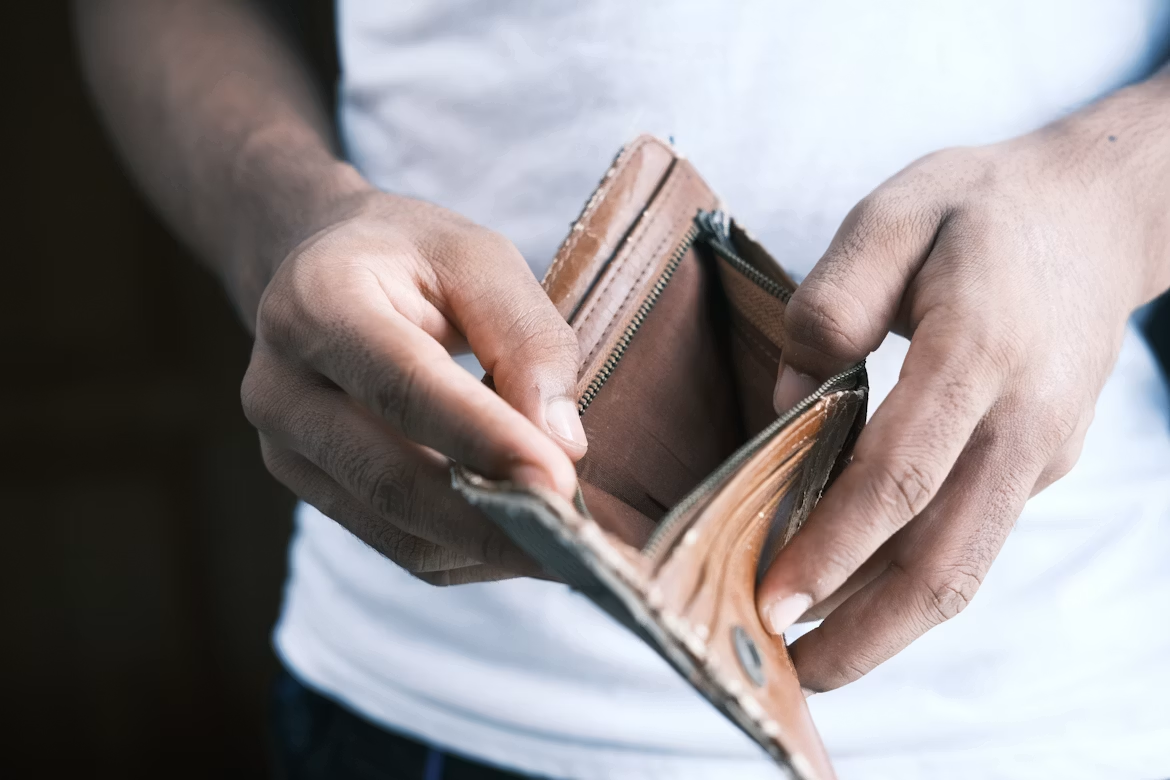

For many South Africans, payday relief doesn’t last long. Between groceries, transport costs, school fees, electricity, airtime, and rising municipal bills, it’s not uncommon for money to run out before the next salary arrives. When that happens, many people turn to credit cards, store accounts, personal loans, or buy-now-pay-later services just to make ends meet.
The result is a cycle that can be difficult to break. The more debt you take on to survive the month, the less money you have available when the next month starts.
If your salary feels like it’s disappearing faster than ever, here are nine practical ways to reduce debt without making extreme lifestyle changes.
-
Stop Funding Everyday Expenses with Credit
One of the biggest debt traps is using credit to pay for everyday essentials.
Buying groceries, fuel, or takeaways on credit may solve today’s problem, but it creates next month’s problem. If you are constantly using credit for basic expenses, your debt balance will continue growing even if you are making monthly repayments.
Ask yourself one question before every purchase: “Can I afford this without borrowing?”
-
Identify the One Expense That’s Eating Your Salary
Many South Africans focus on cutting small costs while ignoring the biggest budget killer.
Instead of worrying about the occasional takeaway coffee, look at the expense taking the largest chunk of your income. For some households, it’s a vehicle repayment. For others, it’s rent, private school fees, or multiple streaming subscriptions.
Reducing one major expense can often have a bigger impact than cutting ten smaller ones.
-
Stop Paying Only the Minimum Amount
Paying the minimum due on a credit card may keep collectors away, but it can keep you in debt for years.
Interest continues accumulating, meaning you end up paying far more than you originally borrowed. Even adding a few hundred rand above the minimum payment each month can significantly shorten the repayment period.
-
Turn Unused Possessions into Debt Payments
Most homes have items that no longer serve a purpose.
Old smartphones, gaming consoles, furniture, televisions, power tools, exercise equipment, and unused appliances can often be sold for cash. Instead of using that money for entertainment or shopping, put it directly towards your highest-interest debt.
The goal is to convert clutter into financial breathing room.
-
Use Your Tax Refund to Buy Back Your Freedom
Every year, many South Africans receive tax refunds and immediately start planning holidays, upgrades, or luxury purchases.
While treating yourself is tempting, using a tax refund to reduce debt can save thousands of rand in future interest charges. A once-off payment can sometimes achieve what months of minimum repayments cannot.
-
Review Every Debit Order Leaving Your Account
Many people don’t realise how much money quietly leaves their accounts each month.
Subscriptions, memberships, app services, and forgotten contracts can slowly drain your finances. Spending 30 minutes reviewing your bank statement could reveal expenses you no longer need.
Cancelling just two or three unnecessary debit orders could free up enough cash to increase your monthly debt repayments.
-
Find One Extra Income Stream
Debt becomes easier to tackle when more money is coming in.
South Africans are increasingly earning extra income through tutoring, freelance work, weekend jobs, content creation, online selling, delivery services, and skills-based side hustles.
Even an additional R1,500 per month directed entirely towards debt can make a noticeable difference over a year.
-
Don’t Make Panic Decisions
When debt becomes stressful, people sometimes cancel insurance, withdraw retirement savings, or take out another loan to cover existing debt.
These decisions often create bigger financial problems later.
Instead of looking for a quick fix, focus on sustainable solutions that improve your financial position over time.
-
Treat Debt Reduction Like a Monthly Bill
Most people prioritise rent, electricity, and insurance because they are fixed obligations.
Debt reduction should be treated the same way. Instead of paying whatever is left at the end of the month, decide upfront how much extra you will put towards reducing debt and make it a non-negotiable part of your budget.
Consistency is often more important than the amount.
With the cost of living remaining high and household budgets under pressure, many South Africans are relying on credit to get through the month. The challenge is that debt repayments reduce future spending power, making it even harder to keep up with rising expenses.
Breaking the cycle does not require winning the lottery or doubling your salary. In many cases, it starts with a few intentional changes that help you spend less, earn more, and gradually reduce what you owe. The sooner you start, the sooner your salary begins working for your future instead of paying for your past

