


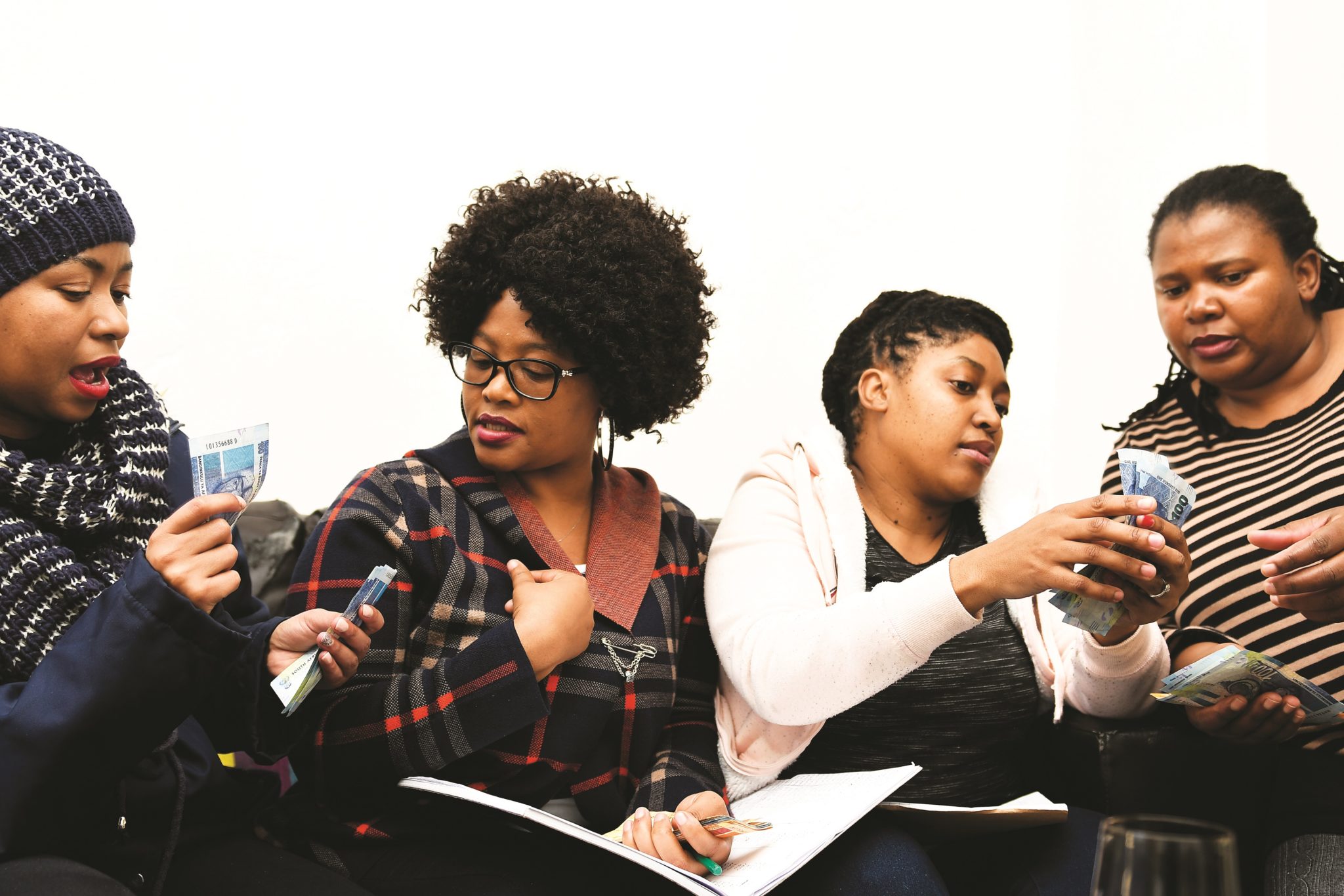

Real talk for real people who work hard for every rand.
Picture this.
It’s December. The whole family is waiting. You’ve been putting in R500 every month since January, that’s R6,000 of your money, your grocery money, your taxi money, money you said no to yourself for.
And then your stokvel treasurer stops picking up the phone.
Her WhatsApp goes quiet. Her gate is locked. And somewhere between November’s payout meeting and Christmas morning, R84,000 of the group’s savings just… disappeared.
This isn’t a made-up story. Ask around in any township, any flat in Soweto, any neighbourhood in Mitchell’s Plain or KwaMashu, someone you know has been through this. Maybe it was you.
This is exactly why more and more stokvels are making the move to a proper bank account. Not because the bank told them to. But because they’ve been hurt before, they’re not going to let it happen again.
“We’ve Always Done It This Way,” And That’s Okay. But Things Are Changing.
There’s nothing wrong with the old way. Stokvels have kept families going in this country for generations. Long before FNB had an app, our grandmothers were already running rotating savings clubs from their kitchen tables and doing it beautifully.
But the amounts have grown. Groups have gotten bigger. And the higher the pot, the higher the risk.
When your stokvel is collecting R200 a month between six aunties in the yard, cash in a biscuit tin works fine. But when you’ve got 15 members each putting in R1,500 a month? That’s R22,500 passing through someone’s hands every single month. That’s too much to carry. Too much to trust to one person, even someone you love.
Banks like Standard Bank, FNB, Nedbank, Absa, and TymeBank now offer accounts built specifically for stokvels. And no, they’re not here to take over your stokvel or tell you how to run it. They’re just here to keep the money safe while you stay in charge.
“But Will the Bank Control Our Money?”
This is the first thing people ask, and it’s a fair question.
The short answer: No. Your stokvel still runs your stokvel.
You still decide:
- How much everyone contributes
- Who gets paid out and when
- What happens if someone misses a month
- Whether you do a monthly rotation or one big December payout
The bank doesn’t touch any of that. What the bank does do is make sure that when it comes time to move money, at least two or three people have to agree. Not just one person. Not just the treasurer acting alone at midnight on a Friday.
Think of it like this in your stokvel, you probably already have a chairperson, a treasurer, and a secretary. The bank just makes it so that those same people all have to sign off before money goes anywhere.
Same structure you already have. Just locked in properly.
“What About Thandi, Who Doesn’t Have a Bank Account?”
This comes up a lot, especially in groups where some members are unbanked or use cash.
Here’s the thing, members don’t need to bank with the same bank as the stokvel account. Most members can do an EFT transfer or even deposit cash at a branch if needed.
And when payout time comes? The stokvel can transfer money directly into each member’s personal account, whether that’s Capitec, TymeBank, a savings account, or anywhere else.
No more showing up at Mama Zodwa’s house with an envelope of cash. No more arguments about who paid and who didn’t. The bank statement shows everything.
The Story of Lindiwe’s Stokvel in Tembisa
Lindiwe has been in the same stokvel since 2017. Twelve women, most of them cleaners, domestic workers, and spaza shop owners. Every month, each one puts in R800.
For the first three years, the money was kept by their treasurer, MaDlamini, a good woman, a church woman, a woman they all trusted completely.
Then MaDlamini got retrenched. Then her son needed surgery. Then her marriage fell apart. And by August of that year, she’d borrowed against the stokvel money with the best intentions of paying it back and couldn’t.
Nobody blamed MaDlamini. Life happened. But R67,000 was gone, and Christmas was coming.
After that, the group opened a Nedbank Stokvel Account. Now:
- Every member gets a monthly statement via WhatsApp
- No withdrawal can happen without three signatories approving it
- The money earns a little interest while it sits there
- There’s never a question about “how much do we actually have?”
“The account didn’t fix our trust problem,” Lindiwe says. “It removed the temptation. Even MaDlamini said she’s relieved. She never wanted to be in that position.”
Does the Money Earn Interest?
Yes, small amounts, but yes.
When your stokvel sits in a dedicated savings account for months at a time, it earns interest. It won’t make anyone rich, but think of it this way: if your stokvel saves R50,000 over the year, even a little interest means your payout is slightly bigger than what everyone put in.
Free money is free money.
“How Do We Actually Open One?”
Most major banks have made this simple. You’ll typically need:
- Your stokvel constitution (even a basic one, some banks will help you write one)
- ID documents for the signatories (usually the chairperson, treasurer, and secretary)
- A minimum deposit is usually very low, sometimes as little as R0 to open
Banks like TymeBank and Capitec have made the process especially easy for groups without a lot of paperwork history. FNB and Standard Bank have dedicated stokvel bankers in many branches who speak isiZulu, Sesotho, isiXhosa, and other languages.
You don’t need to be “bank people” to do this. You just need your group’s details and your IDs.
Real Talk: The Bank Won’t Save a Bad Group
Let’s be honest here, too.
A bank account doesn’t fix everything. If your group has no rules, no constitution, and no clear agreement about what happens when someone leaves or misses payments, those problems will still exist.
A bank account is a tool, not a miracle. The foundation is still the same as it’s always been, clear rules, honest communication, and people who show up for each other.
But for groups that already have those things? A bank account removes the weakest link, the moment when everything depends on one person’s goodwill, and that person is only human.
The Bottom Line, Straight Up
Your stokvel is one of the most powerful financial tools available to ordinary South Africans. You built it yourselves, without a financial advisor or a government program. That deserves protection.
A stokvel bank account won’t change what your group is. It will just make sure that what your group builds all those months of R300s and R500s and R1,000s is still there when it matters most.
For Lindiwe’s group in Tembisa, it meant Christmas happened that year.
For yours, it could mean the same.
Talk to your nearest bank branch about stokvel accounts, or ask a member to visit the FNB, Nedbank, Standard Bank, Absa, or TymeBank website for more information.

